Sovereign Computing
The open initiative defining open source foundation infrastructure that organisations can run, trust and procure with confidence.
SOVEREIGN COMPUTING INITIATIVE
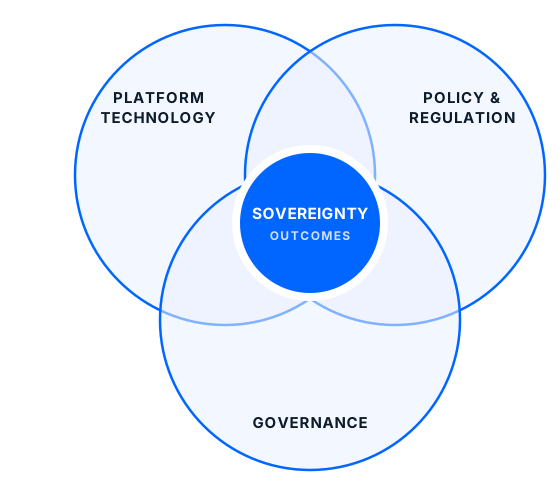
Technology, policy and governance — aligned.
Sovereignty is what happens where they meet — delivered as turnkey open source infrastructure, not a promise.
- ✓ Your data, in your jurisdiction
- ✓ Providers you can change next quarter
- ✓ Infrastructure on your terms
About 20 questions, five minutes. You get a tailored report by email.
Open source foundation infrastructure that runs on your terms - and the shared definition that makes it something you can actually procure.
Why you need to know about this
Most organisations now depend on cloud infrastructure they do not control. Pricing, availability, access, and the jurisdiction your data sits in are all decided elsewhere, and can change with little notice. Regulatory pressure, geopolitical risk, and the strategic cost of lock-in have turned a quiet operational detail into a board-level question: who really controls the infrastructure we run on?
There is an answer - infrastructure you own or fully control, built from open source, running on your own or trusted hardware. The pieces exist. What has been missing is a way to recognise that infrastructure, compare it honestly, and buy it with confidence.
That is what the Sovereign Computing Initiative exists to provide.
The gap we are closing
Standards frameworks such as the Sovereign Cloud Stack and GAIA-X describe what sovereign infrastructure should look like. Applications such as Nextcloud and OpenDesk are ready to run on it. But the layer in between - turnkey, self-hosted, open source foundation infrastructure that a non-specialist organisation can run on its own hardware - is fragmented, inconsistently defined, and hard to procure.
That layer is what we call sovereign computing, and defining it is the work of this initiative.
What we are doing
We are defining a category - not a product, not a platform, not a vendor.
A clear, shared definition of what sovereign computing infrastructure is and what it must include. An open conformance framework that says what qualifies and what does not. And a mark a buyer can trust in a procurement process.
What is sovereign computing? →
What makes it real, not a label
Sovereign is an over-used word. Three properties separate genuine sovereignty from a sticker:
- Support you can source from more than one vendor
- Every level of support, from first-line help to deep engineering, can be bought from independent providers through open interfaces - so no single supplier can hold you captive.
- An open conformance test
- A published checklist, usable directly in procurement, that an independent auditor can verify - not a self-awarded badge.
- The Sovereignty Test
- One practical question behind all of it - could you change your provider next quarter without losing your data, your history, or your ability to operate? If not, it is not sovereign.
Where you fit
We are building this with two audiences in mind.
- If you run or procure infrastructure
- Public sector, NGO, enterprise, or SMB - the category gives you a way to specify, compare, and buy sovereign infrastructure. See for buyers.
- If you build or provide it
- Open source projects, integrators, and hosting providers - help define the category and the conformance framework, and be part of the ecosystem that forms around it. See for providers.
An open initiative
The Sovereign Computing Initiative is an open, collaborative effort - globally minded and EU-rooted, working in alignment with EuroStack, GAIA-X, the Sovereign Cloud Stack, and related European digital sovereignty initiatives.
We are at an early stage and actively seeking collaborators who share the goal of making sovereign computing a well-defined, procurable reality.